
Why Data Centers Are Facing an Electricity Challenge
Data centers are becoming one of the fastest-growing sources of electricity demand. Here's why the growth of cloud computing is creating new challenges for power grids, water resources, and infrastructure.
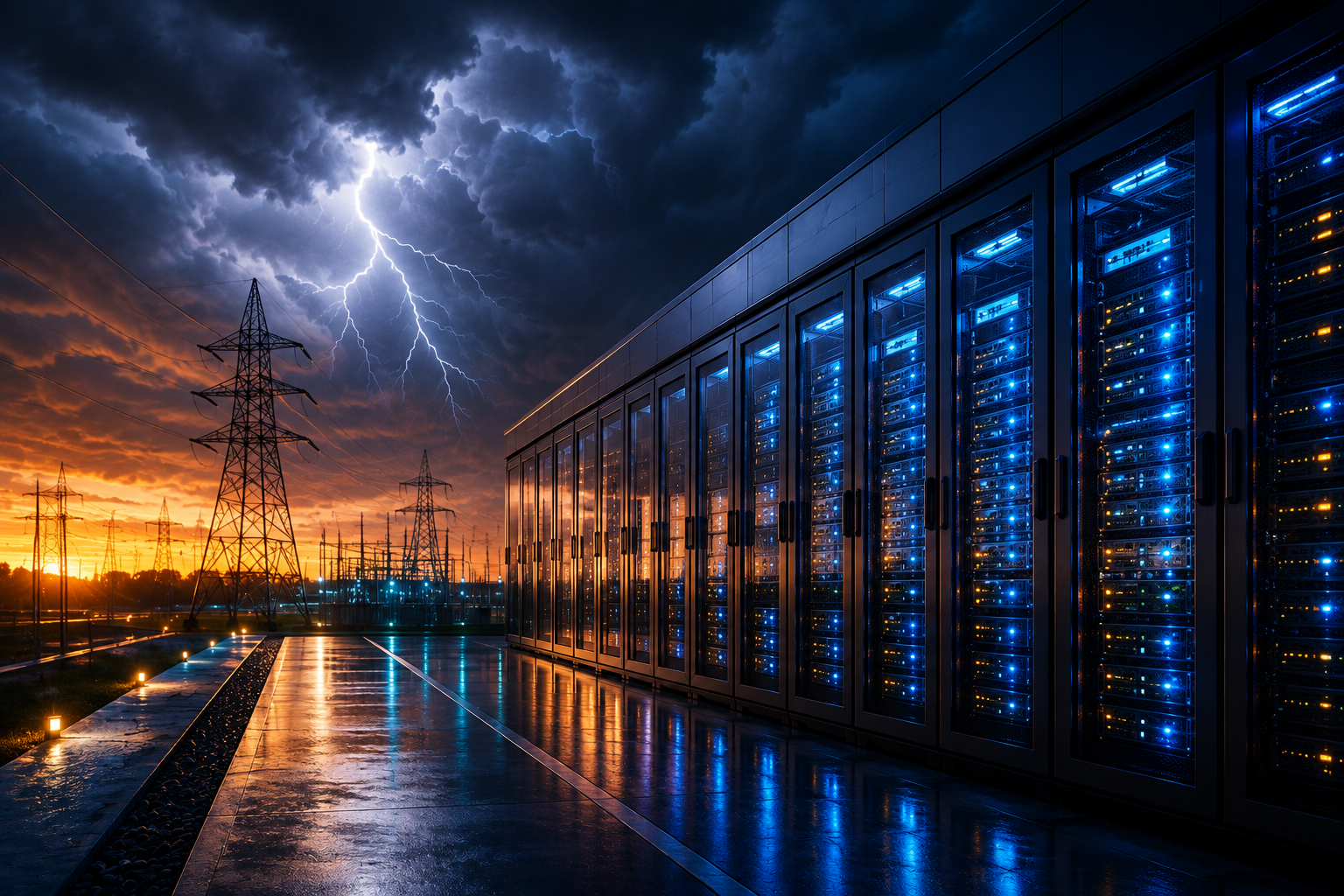
Why Data Centers Are Facing an Electricity Challenge
When we think about the internet, it often feels like magic. We can instantly browse websites, stream videos, share photos, process payments, or chat with smart tools without thinking twice about what happens behind the scenes. All of this, however, relies on a vast network of data centers—large buildings filled with servers and technology that truly make up “the cloud.”
But these data centers are not floating in the sky. They are tangible infrastructures, and they come with a hefty electricity demand.
The Cost of Our Digital Lifestyle
For many years, our discussions around technology growth centered on speed—faster computers, bigger storage, and better internet connections. Now, a pressing question has surfaced:
Where will we source enough electricity to power everything?
Data centers are rapidly growing globally. With the rise of cloud computing, streaming services, online platforms, cryptocurrencies, enterprise software, and particularly AI, the strain on our electricity resources is becoming significant.
According to the International Energy Agency (IEA), global electricity consumption by data centers is expected to approximately double by 2030.
This doesn’t mean we’ll suddenly run out of electricity, but the bigger worry is whether we can boost electricity generation and improve our power grids quickly enough to meet this surging demand.
Why Such High Power Needs?
Think of a data center as more than just a big room filled with computers. Inside, you might find thousands—sometimes even hundreds of thousands—of servers running constantly.
Naturally, those servers consume a vast amount of electricity, but that’s just part of the story. Electricity is also required for:
Cooling systems
Fans and pumps
Networking equipment
Storage systems
Power conversion
Battery systems
Backup generators
Security systems
Building lighting and infrastructure
Unlike regular office spaces, a large data center might demand immense power around the clock.
Plus, all those servers generate substantial heat, which has to be managed efficiently. So, as computing needs grow, the cooling and electrical systems must scale up alongside them.
The Irony of Efficiency
It might seem like a classic efficiency problem. After all, today’s processors and cooling systems are more efficient than ever. They can perform more tasks while consuming less energy compared to older models.
So, why is our overall electricity consumption still on the rise?
The answer lies in how we’re using these resources.
For instance, take smartphones—if your phone becomes more efficient, you likely won’t cut back on your usage. Instead, you’ll use more apps, watch higher-quality videos, and store more data.
The same logic applies to data centers.
While individual tasks may become more energy-efficient, the sheer volume of tasks continues to skyrocket.
AI and Growing Demand
Artificial Intelligence has brought this issue to the forefront.
Training and running advanced AI models require powerful processors, which consume a lot of electricity. But AI isn’t the sole player in this field.
Data centers have already been supporting numerous applications, databases, streaming services, social media platforms, enterprise systems, and cloud services.
AI simply adds another significant workload to an already heavily utilized digital infrastructure.
Thus, it would be misleading to suggest that AI is solely responsible for the electricity challenge.
The broader narrative is about the relentless growth of computing itself.
Challenges with the Power Grid
Here’s where it gets interesting.
Imagine a company wants to build a massive new data center. It’s not enough to just have the servers; they also need access to a stable and reliable electricity supply.
This involves a large infrastructure chain that includes:
Power Plants → Transmission Lines → Substations → Transformers → Data Center
Every segment of this chain has its limits.
You can’t just build a new data center one day and expect an electricity supply to appear overnight.
Building new transmission lines can take years. Transformers can have long manufacturing lead times. Substations require careful planning and construction. Expanding power generation capacity isn’t instantaneous either.
This creates a curious predicament: a technology company might have the finances, servers, and land ready, but still find itself waiting for adequate electricity infrastructure.
In some places, the availability of power is becoming as crucial as finding a suitable piece of land.
Water: An Underappreciated Resource
Lastly, let’s not overlook another essential resource—water.
Many data centers rely on water-based cooling systems to keep their equipment operating at safe temperatures.
As we rely more on these infrastructures, we need to think about not just how much electricity they consume, but also how much water they require to function.
This becomes particularly important in regions where water resources are already under pressure.
As our digital world grows, it’s vital to consider the holistic impact of data centers on both electricity and water resources.
Technology will continue to advance, and our dependence on digital infrastructure will only increase. The challenge is making sure that this growth happens in a way that is reliable, efficient, and sustainable.
Because behind every cloud service, every application, and every online interaction, there is a physical infrastructure working continuously in the background.
The cloud may be digital, but the resources powering it are very real.